
Feel the blood running through my veins…
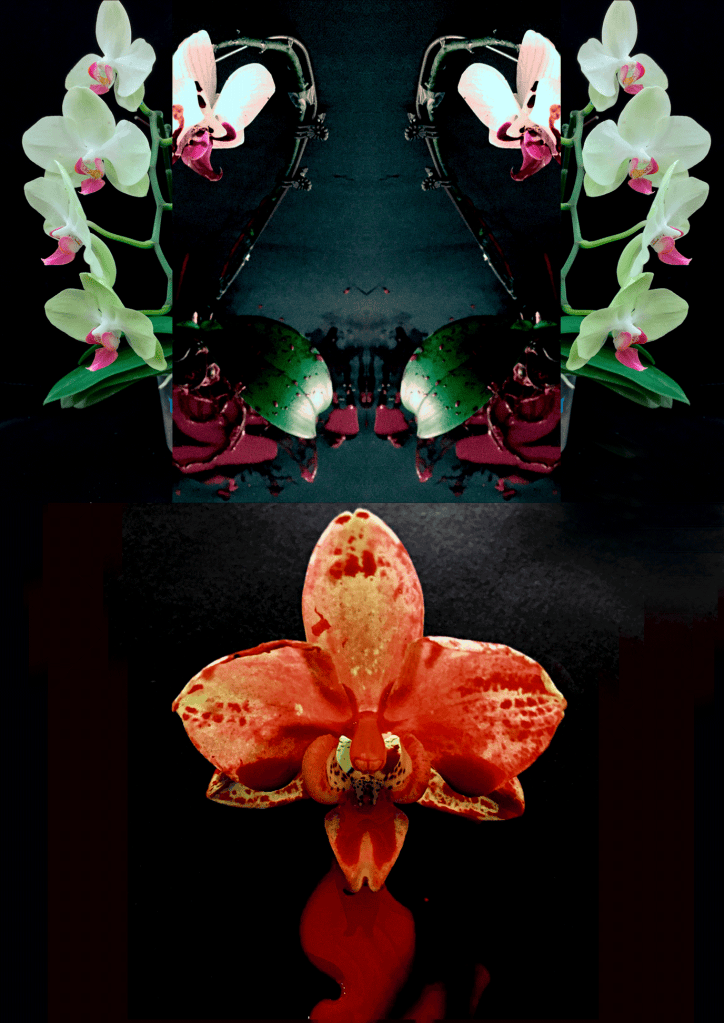
Blood Fusion
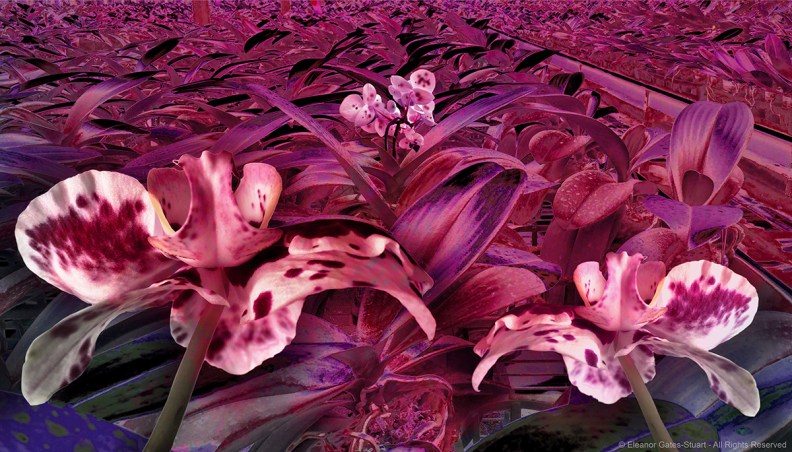
Blood Fusion began in 2016 with a provocative proposition: what might happen when human blood is introduced into another living system? Developed at the Orchid Research and Development Center (ORDC), National Cheng Kung University, Taiwan, the project brought artistic and scientific expertise together through experimental research with Phalaenopsis orchids.
Human blood and red dye were introduced through a series of experimental treatments, with flowers, leaves and roots sampled, observed and recorded. Laboratory methods and specialist knowledge revealed the orchid at unfamiliar scales and from unexpected perspectives, generating an extraordinary field of photographic material, visual data and experimental observations. At the same time, artistic enquiry brought different questions and ways of looking into the laboratory, allowing scientific observation to become material for interpretation, visualisation and transformation.
This exchange of expertise was central to Blood Fusion. Access to scientific knowledge, equipment and experimental methods created opportunities beyond the usual boundaries of artistic practice, while artistic approaches to observation, imaging and visual thinking offered another way of encountering the research. The camera became both a recording instrument and a means of visual enquiry, following the experiment while searching for relationships between structure, colour, pattern and form.
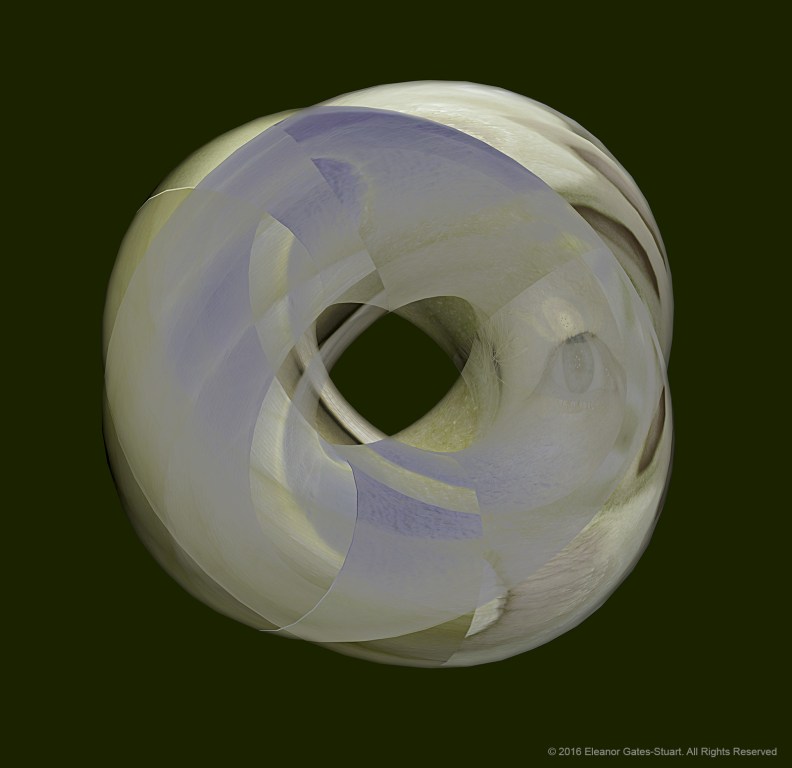
Explore the research
Blood Fusion extends across artworks, experimental records and publications. Explore the wider research through the Portrait Institute, or continue through the project below.
Explore Blood Fusion at the Portrait Institute
In the Laboratory
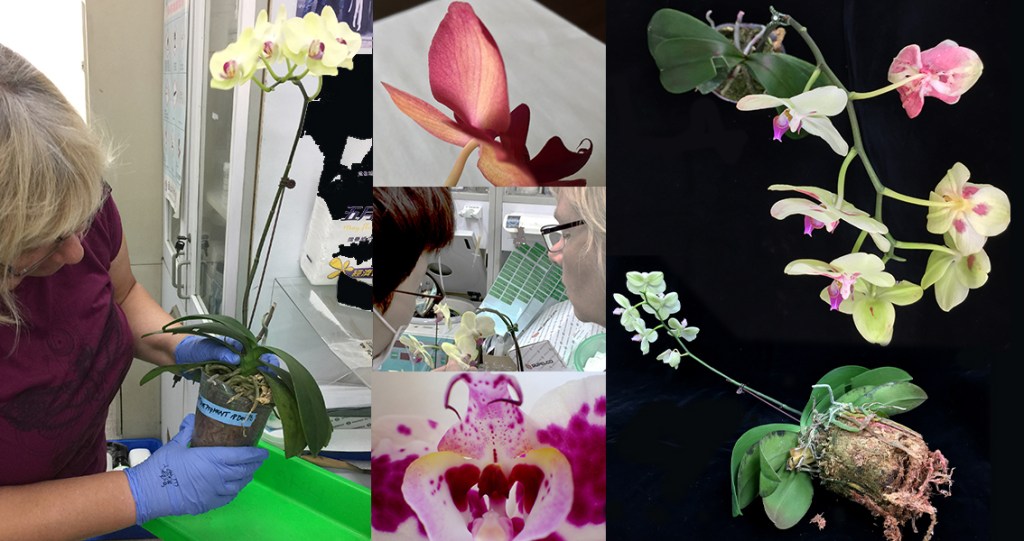
The laboratory became an active site of exchange between scientific method and artistic observation. Working alongside Pei-Han Lai at ORDC provided direct engagement with orchid research and the practical procedures required to undertake the experimental treatments. Drip, injection and soaking methods were applied to different parts of the plants, while flowers, leaves and roots were sampled and documented as the investigation progressed.
Photography was integral to this process. The orchids were recorded repeatedly, from whole plants and flowers to roots, treatment sites and dissected specimens, alongside the equipment, labels and materials of the laboratory. Changing the angle of view, moving closer to a specimen or isolating it against a dark background could reveal structures and relationships that were less apparent through conventional observation. What began as documentation quickly developed into a substantial visual resource for the research.
These encounters between laboratory procedure, close observation and image-making became increasingly important to the development of Blood Fusion. Scientific recording established evidence of the experiment; artistic observation extended what could be seen and how that material might subsequently be interpreted.
StudioLab
StudioLab extended the investigation beyond the laboratory, bringing experimental records, photographic material and artistic practice into the same working space. Images of treated orchids, laboratory apparatus and experimental procedures became material for digital composition, drawing and visual experimentation, allowing the research to shift from observation towards interpretation.
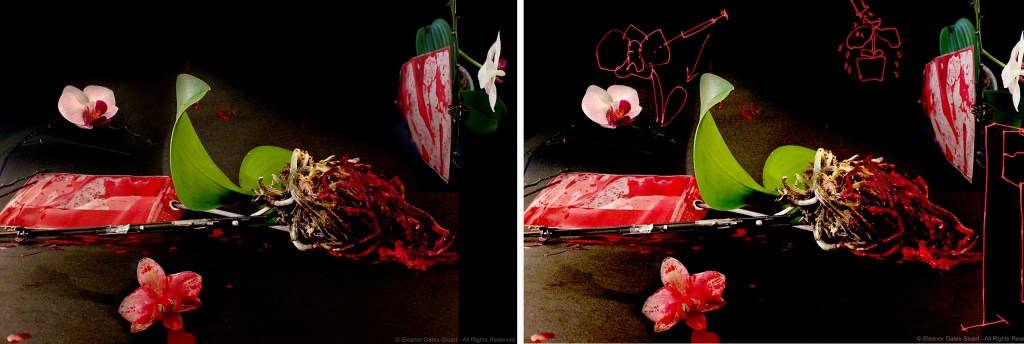
Early works such as Infusion retained a strong connection to the experimental procedure. Needles, fluid bags, measurements and saturated colour remain conspicuous within the image. The Integration series developed this material further, with each work corresponding to a particular treatment or method and coded titles retaining a connection to the experimental record. Apparatus such as blood bags, plant trays and test tubes remained visible, but increasingly operated as elements within the composition alongside flowers, photographic fragments, colour and form.
Drawing introduced another layer of enquiry. Annotated versions of the Integration works trace relationships across the photographic material, connecting experimental observation with the physical gesture of drawing. The resolved artworks and their associated annotations reveal how laboratory material could be reorganised and transformed through artistic practice without losing its connection to the research from which it originated.
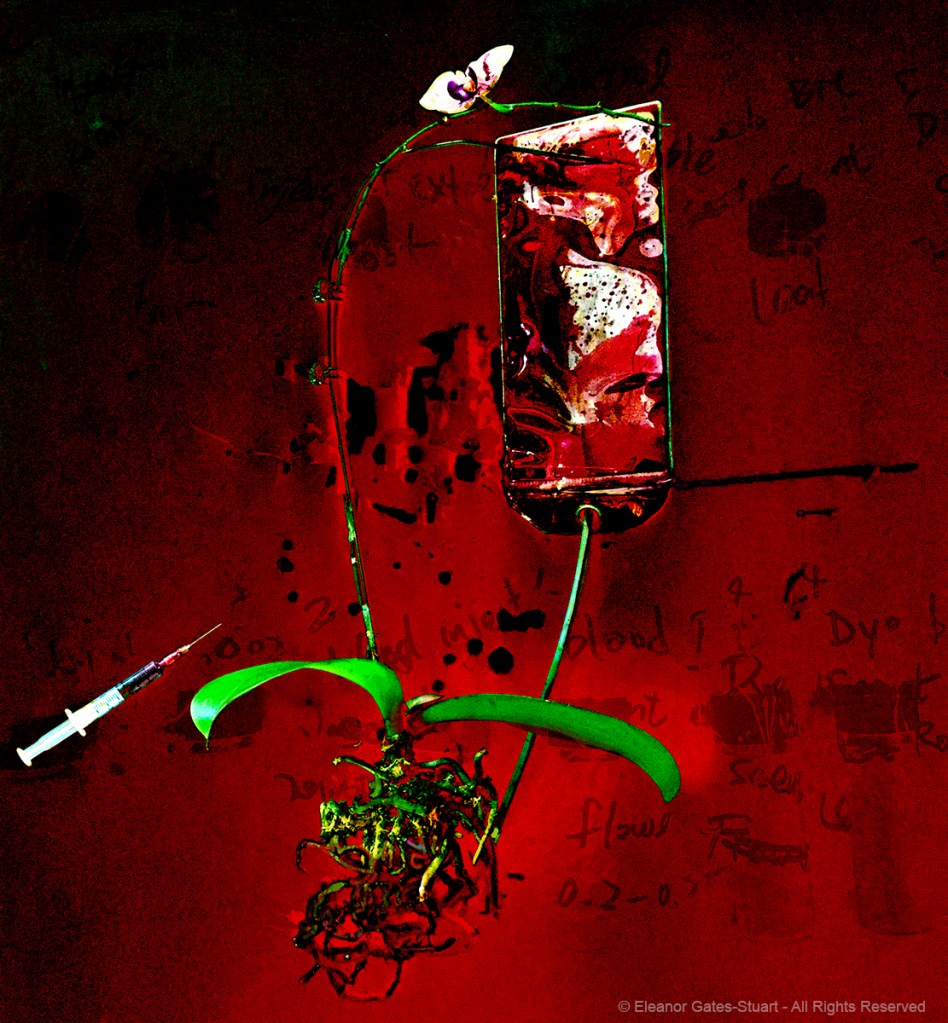
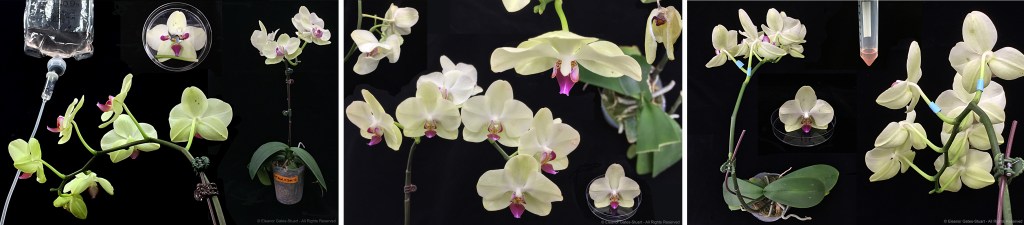
Integration: BDS | Integration: BSI | Integration: BTI, Eleanor Gates-Stuart, 2016. Blood Fusion series.
Speculation
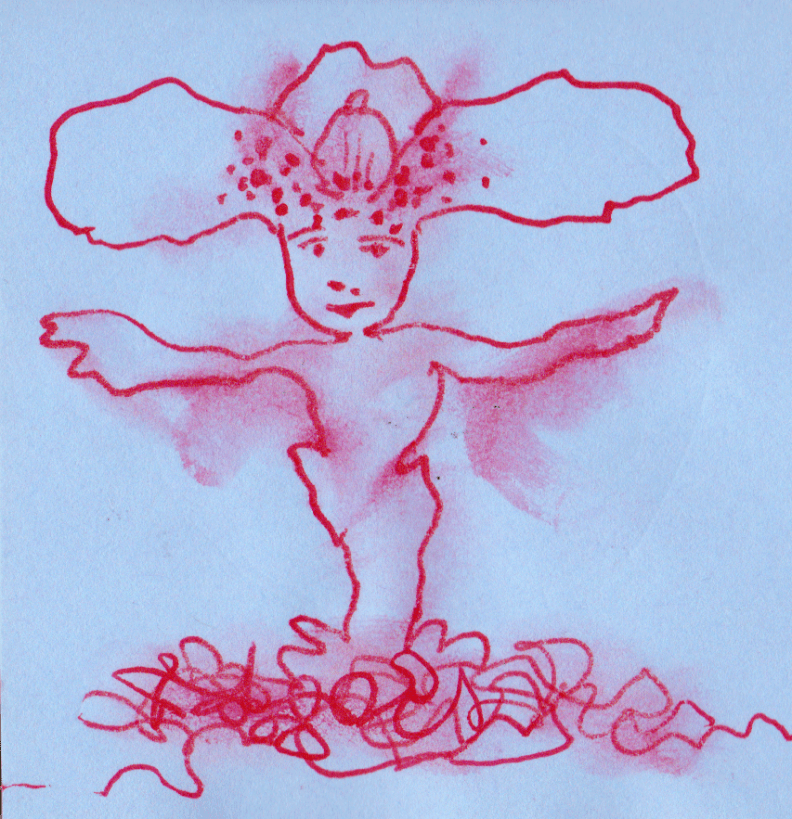
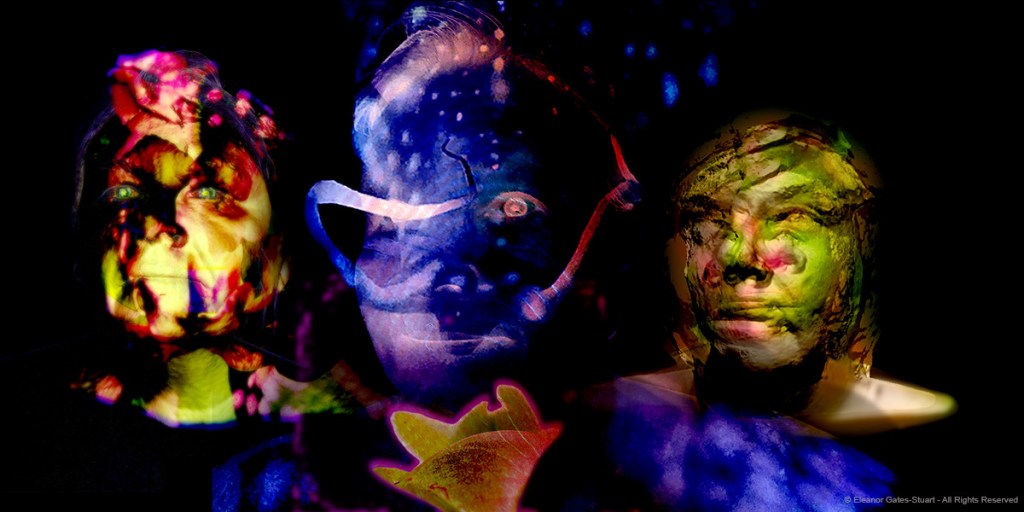
Drawing extended Blood Fusion beyond the immediate evidence of the experiment, allowing human and botanical forms to enter unexpected relationships and move between biological structure, identity and imagined transformation. Rapid sketches tested ideas freely: flowers acquired faces and characters, buds suggested bodies, while hair, teeth, DNA and speculative devices appeared alongside observations from the research. Humour and play were integral to this process, allowing improbable possibilities to enter the work without presenting them as scientific propositions. Photography of skin, eyes, hands and facial features developed alongside the drawings, introducing natural markings and patterns of the human body as another visual system and extending the relationship between plant and human towards likeness, camouflage and identity.
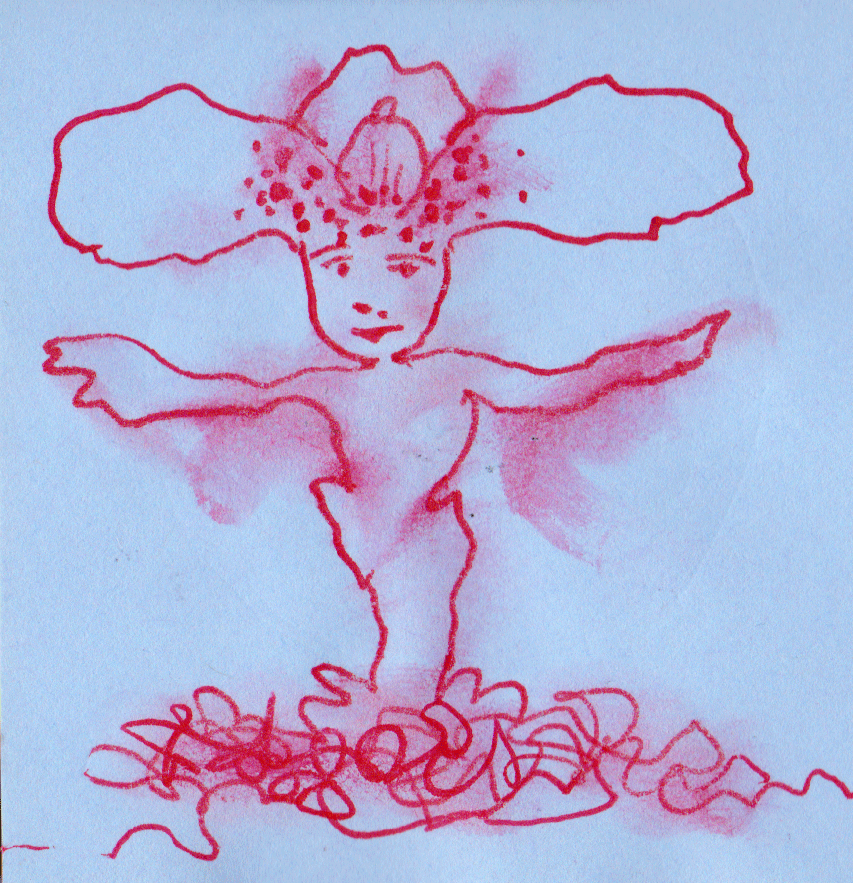
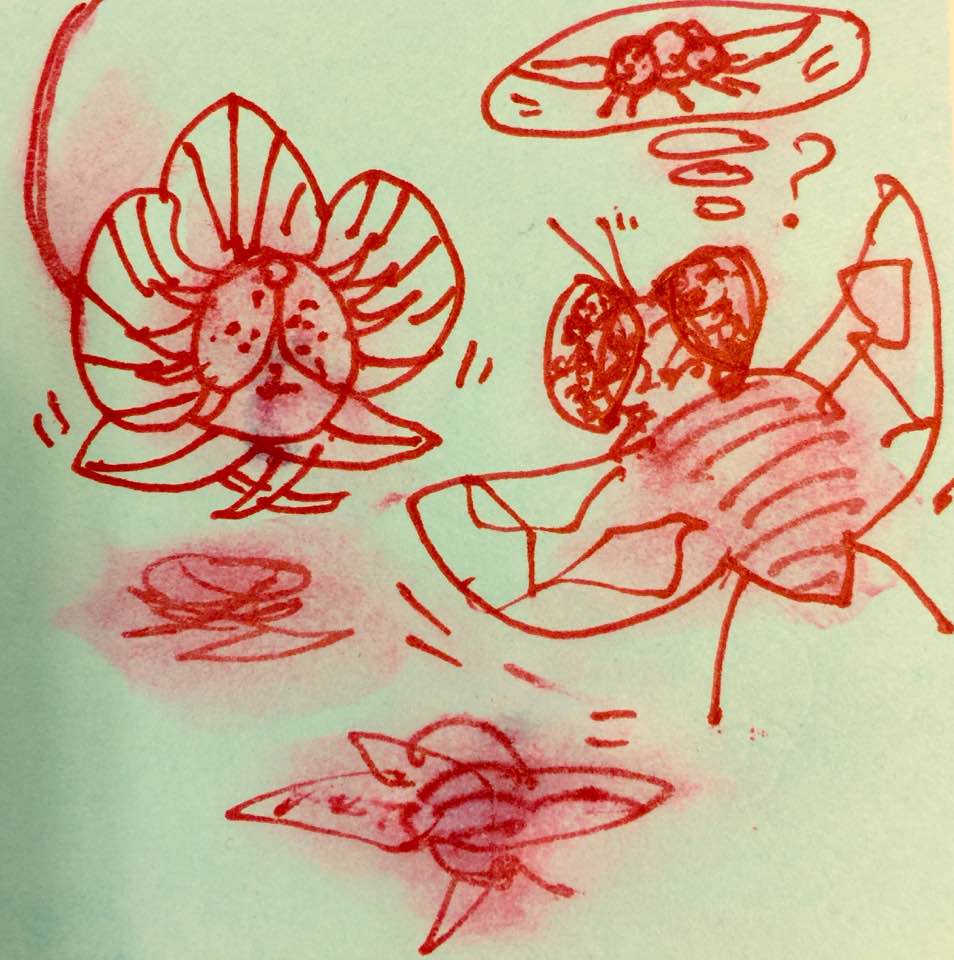
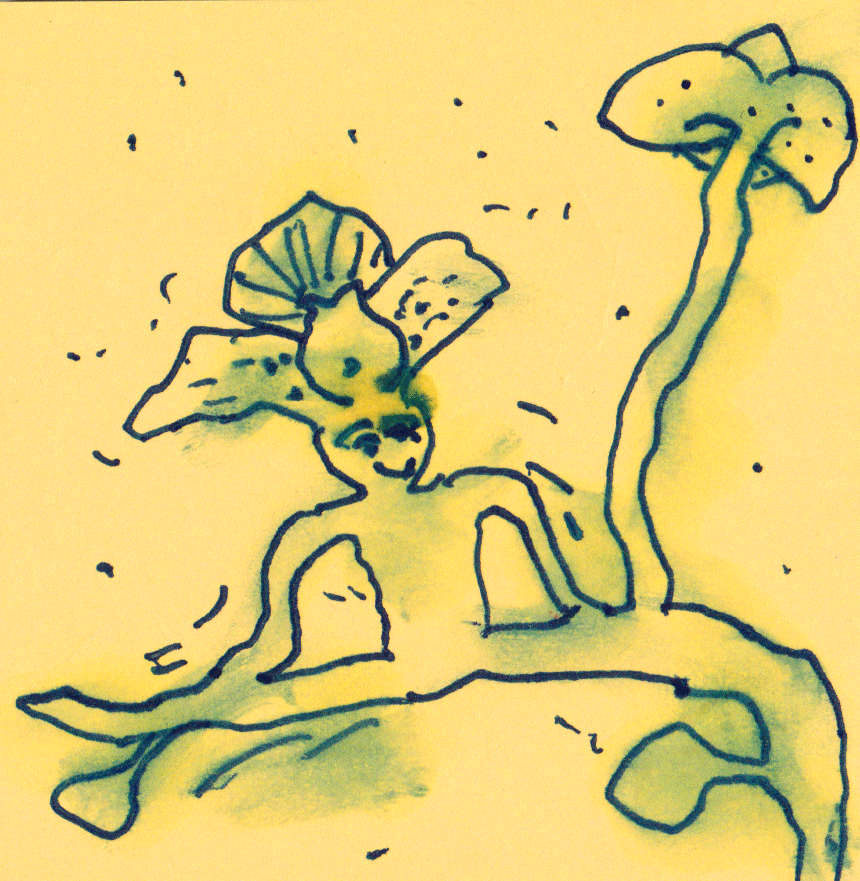
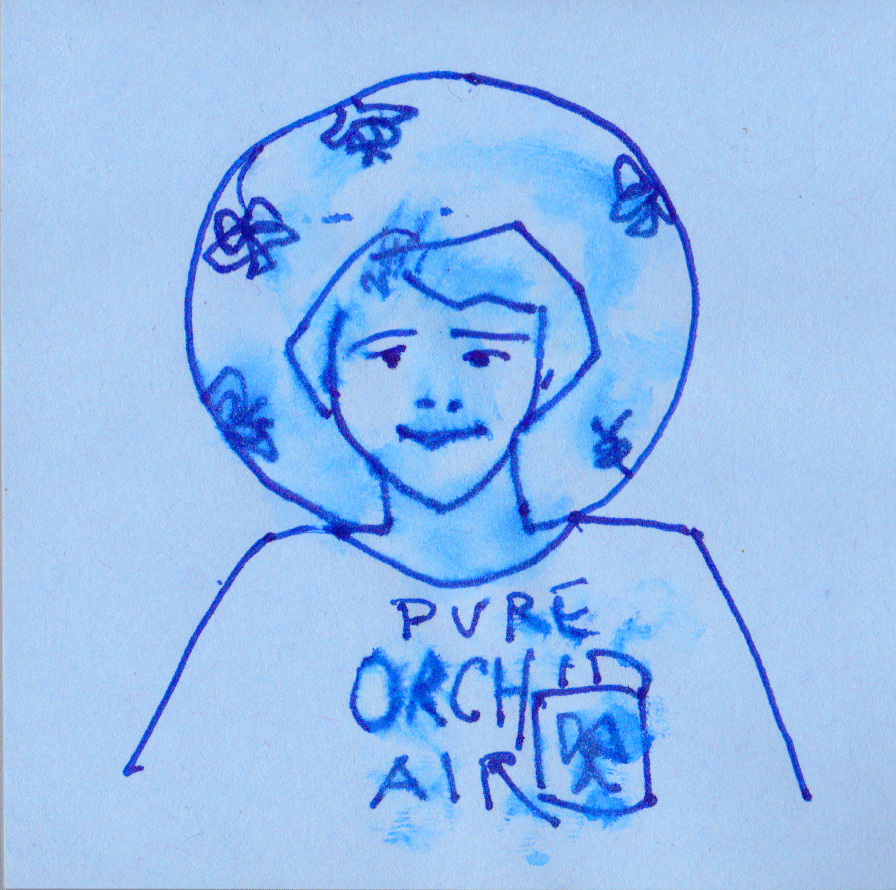
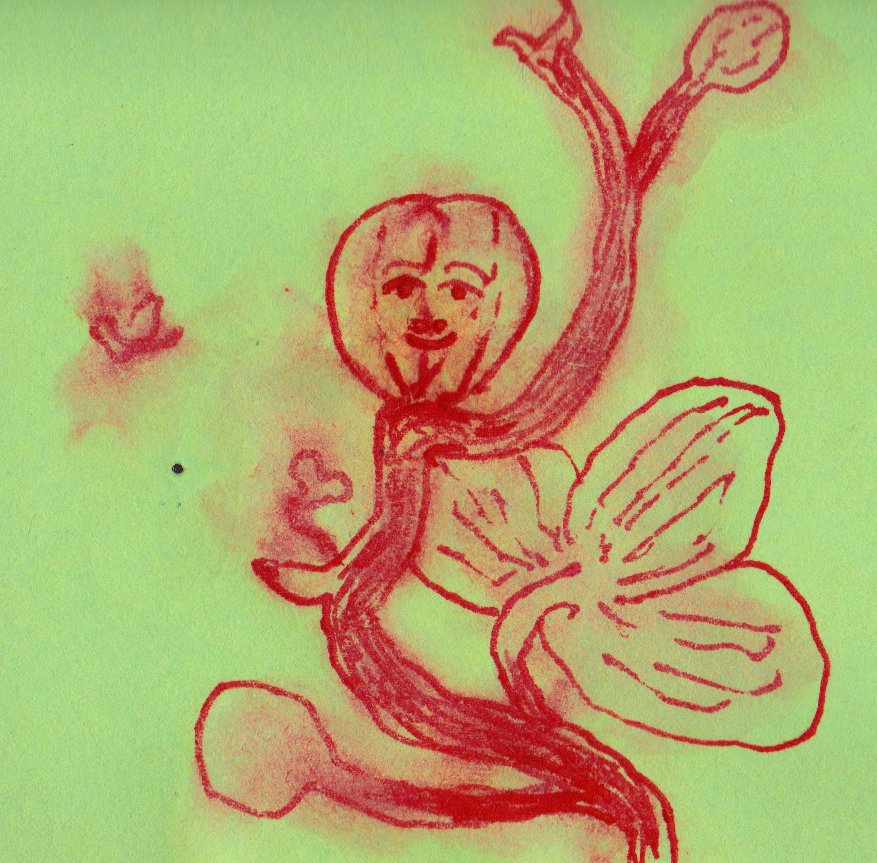
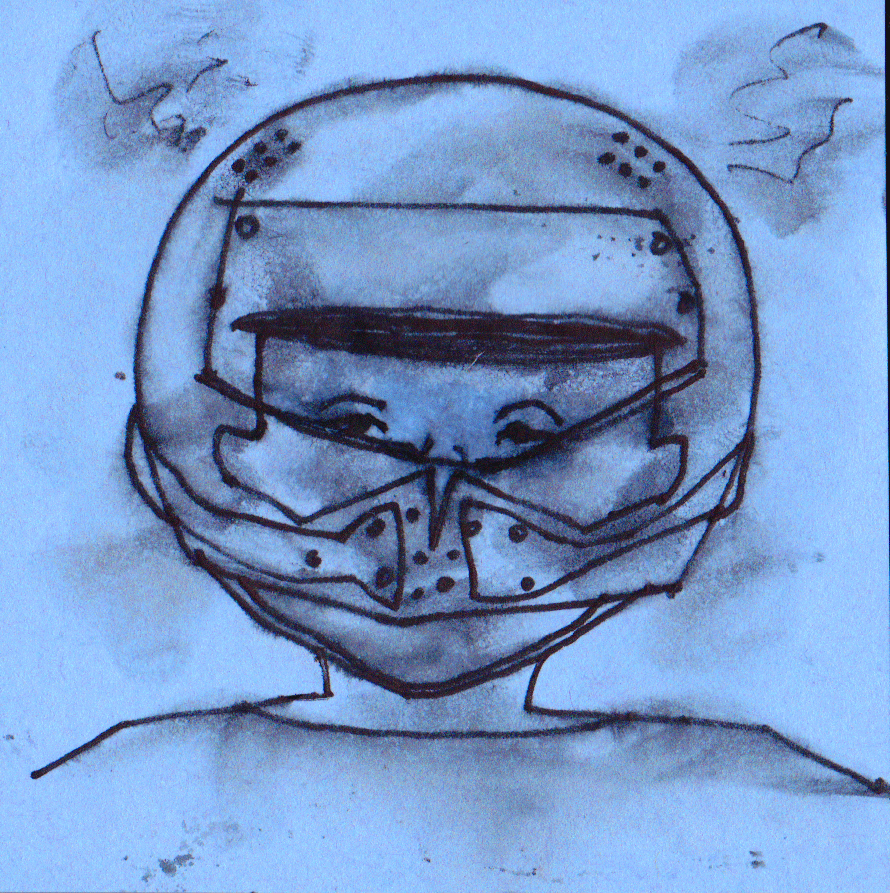
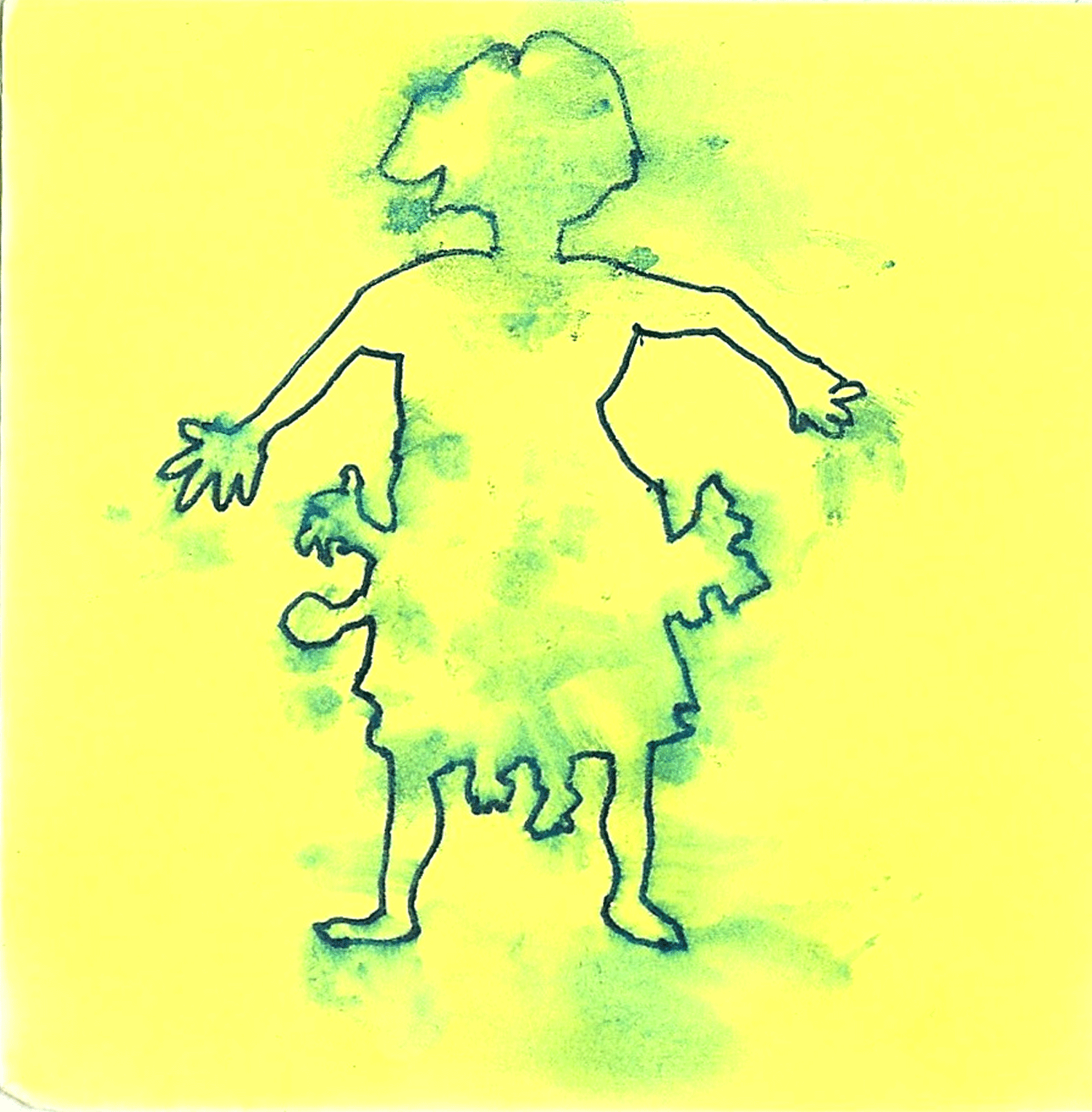
Selected speculative drawings and working sketches from Blood Fusion, Eleanor Gates-Stuart, 2016. Further research material is preserved in the Blood Fusion Research Archive, Zenodo.
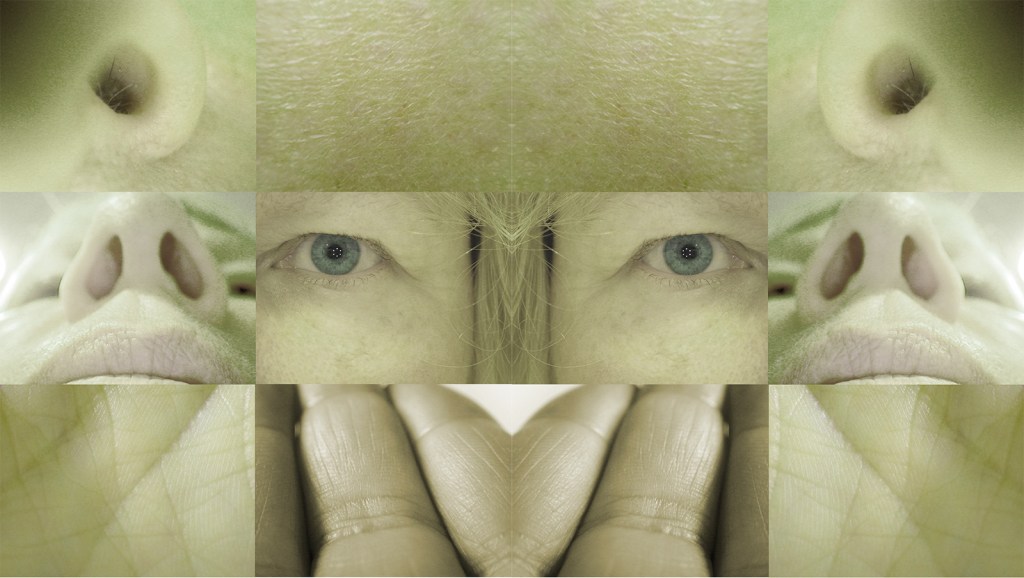
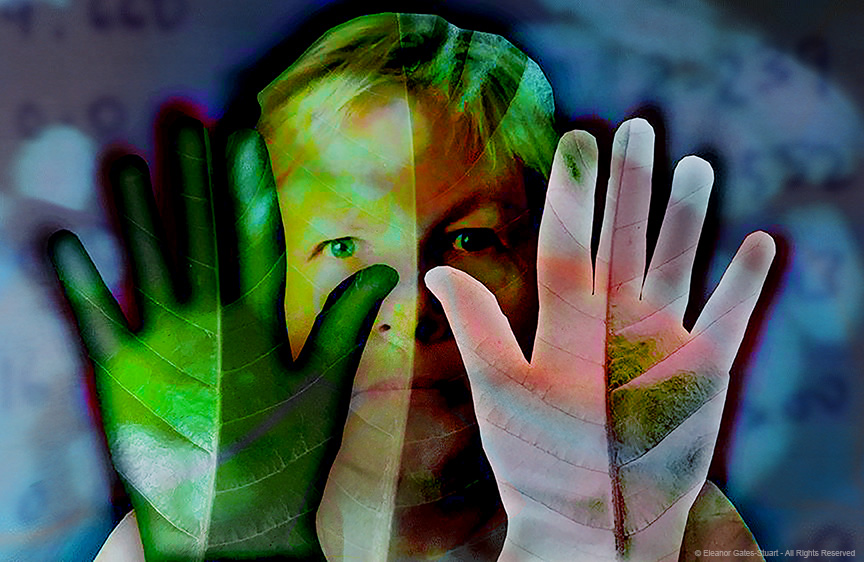
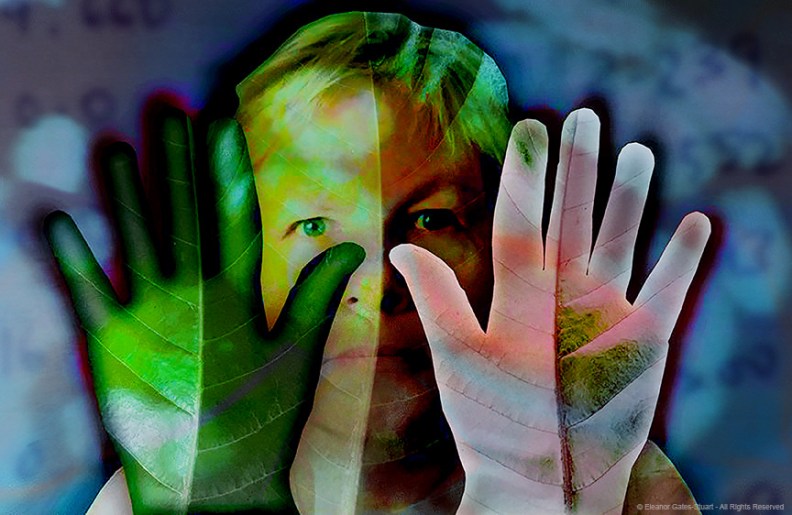
Irrigation brings the human body directly into the visual language of Blood Fusion. Patterns derived through photographic observation move across the face and hands, shifting between visibility and camouflage and extending the research towards questions of identity, likeness and transformation.
Transformations
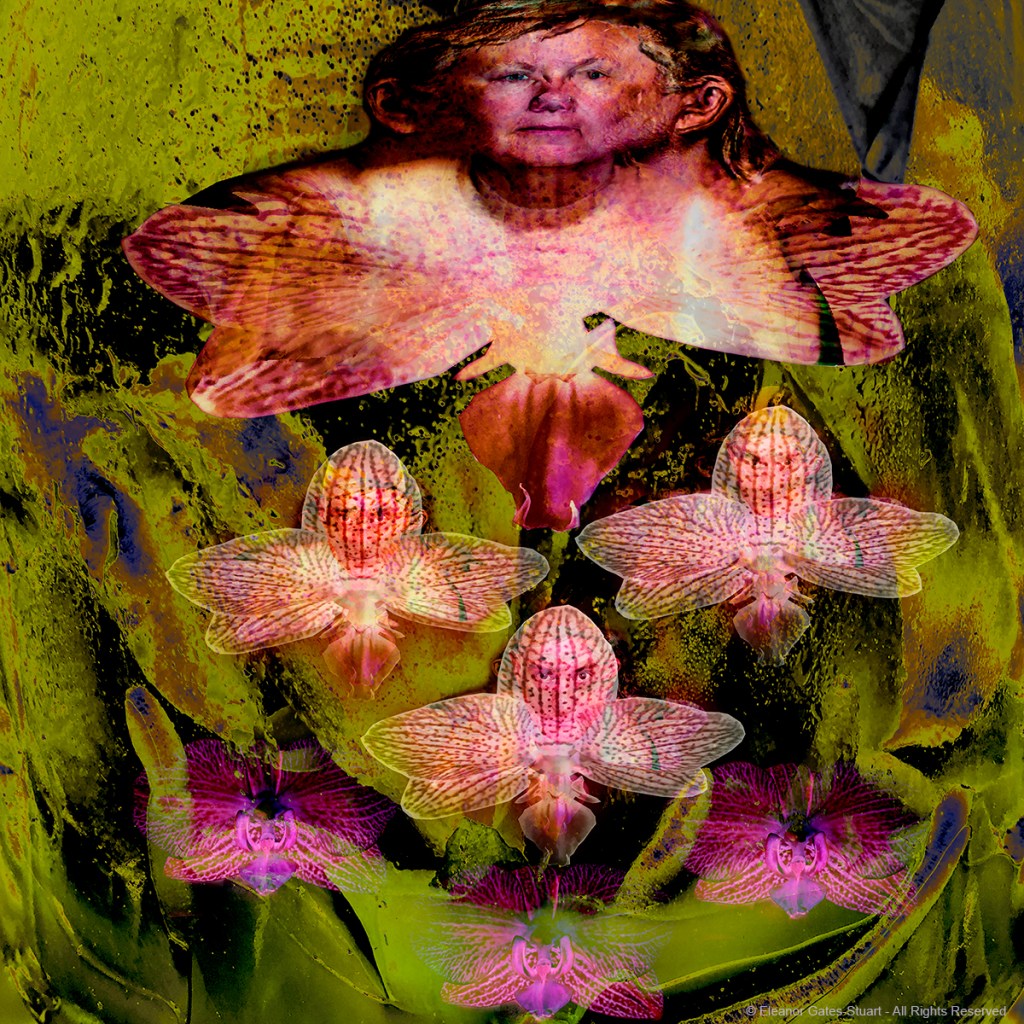
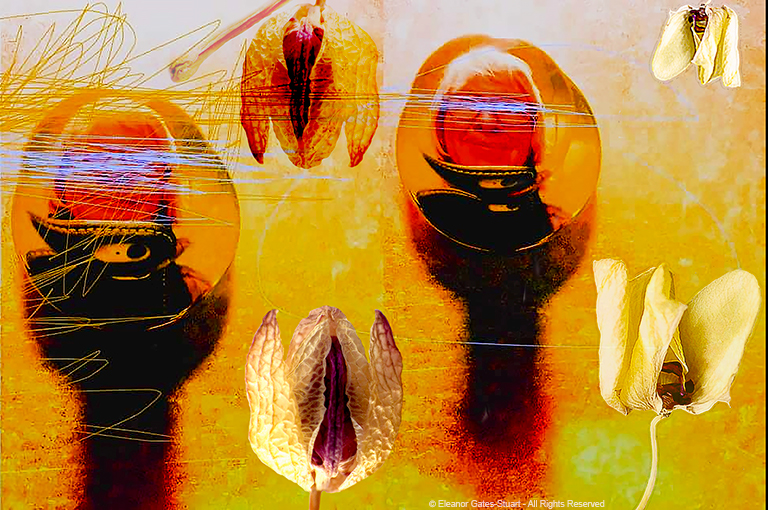
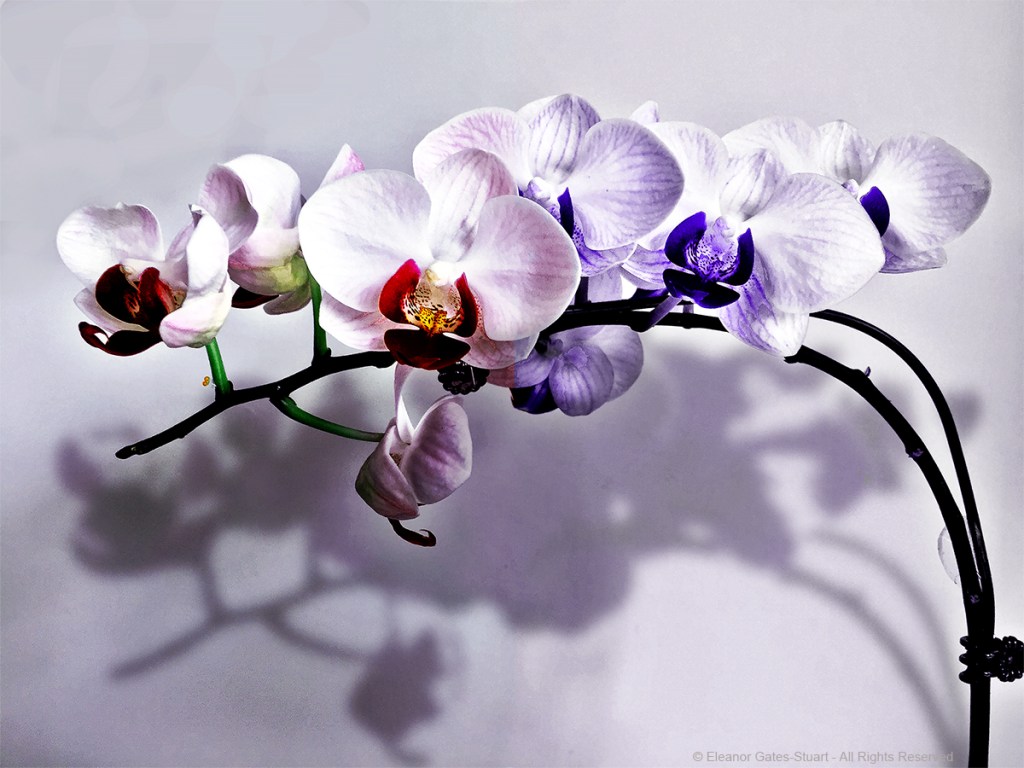
As Blood Fusion developed, the experimental material became increasingly transformed through the artworks. Orchids, human features, biological structures and imagined forms moved between observation and invention, creating hybrid environments in which identity, attraction, reproduction and transformation could be explored. Scientific research remained the catalyst, but the artworks were free to speculate beyond the experimental evidence.
Professor’s Lab
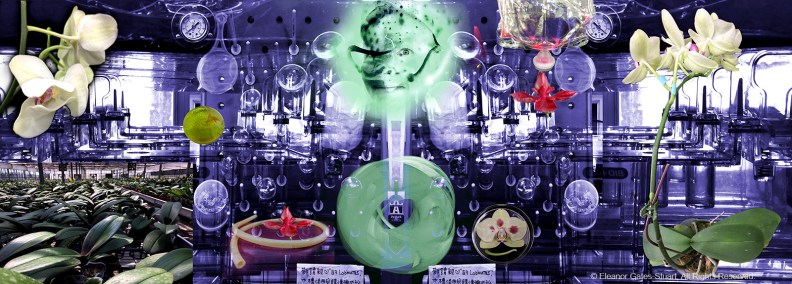
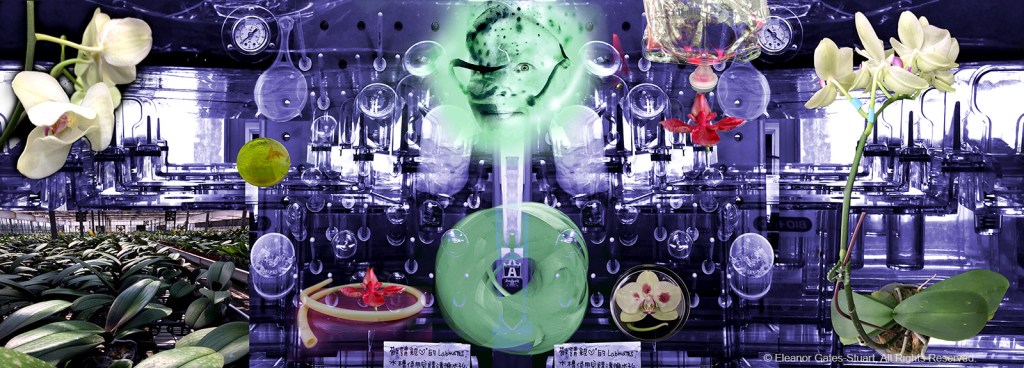
Professor’s Lab expands the speculative world of Blood Fusion, bringing orchid research, StudioLab practice and references from across the wider body of work into a densely layered visual environment. Plant forms, laboratory vessels, hybrid figures and fragments of earlier projects coexist within an accumulation of images that invites exploration. The work celebrates the laboratory as a place of exchange, invention and possibility, where scientific and artistic knowledge can generate unexpected connections.
Survival and Adaptation
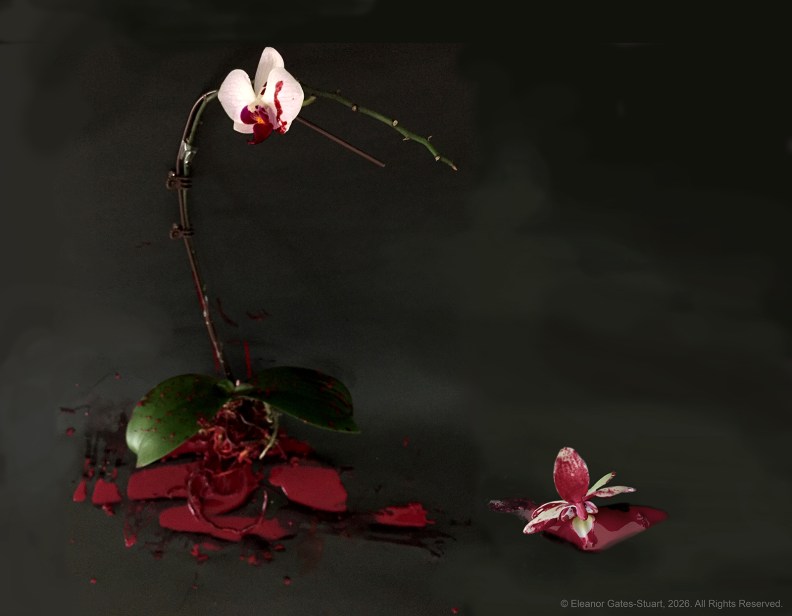
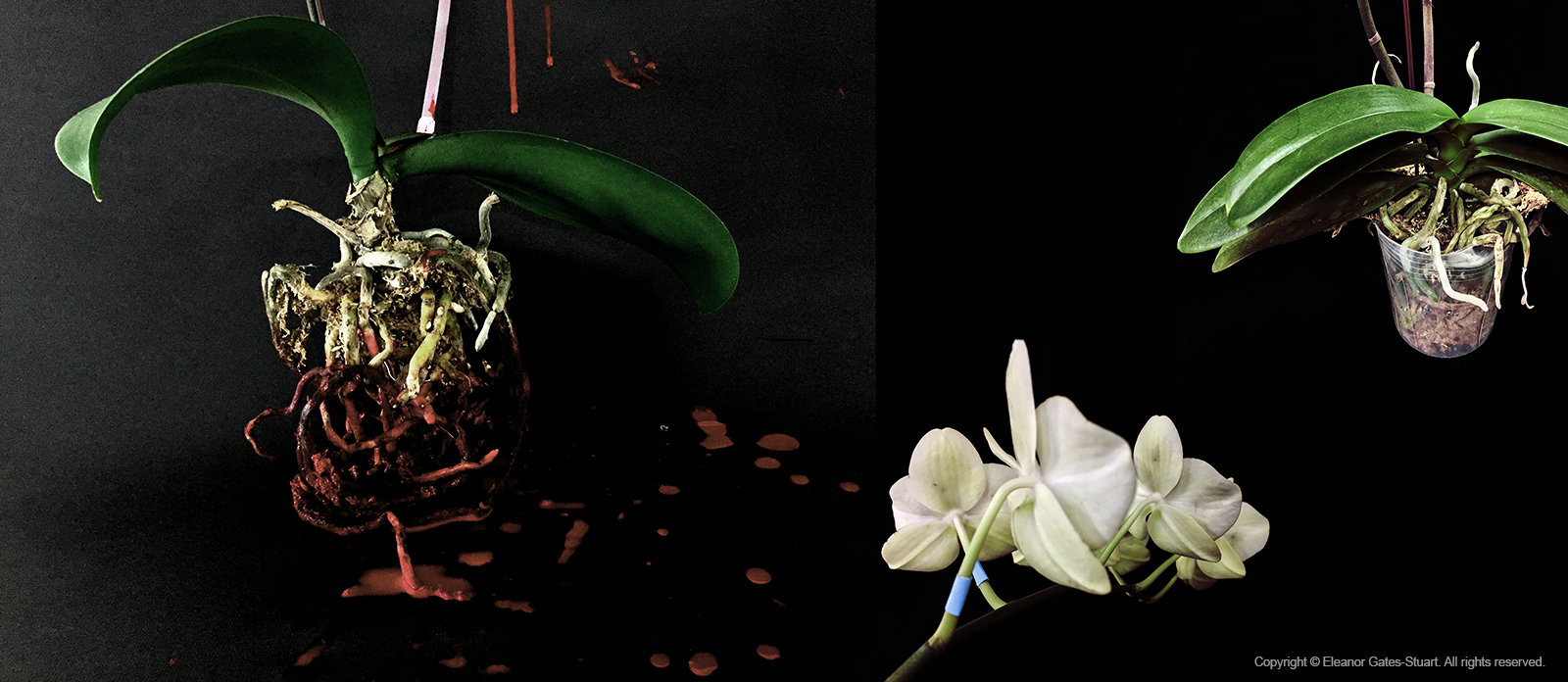
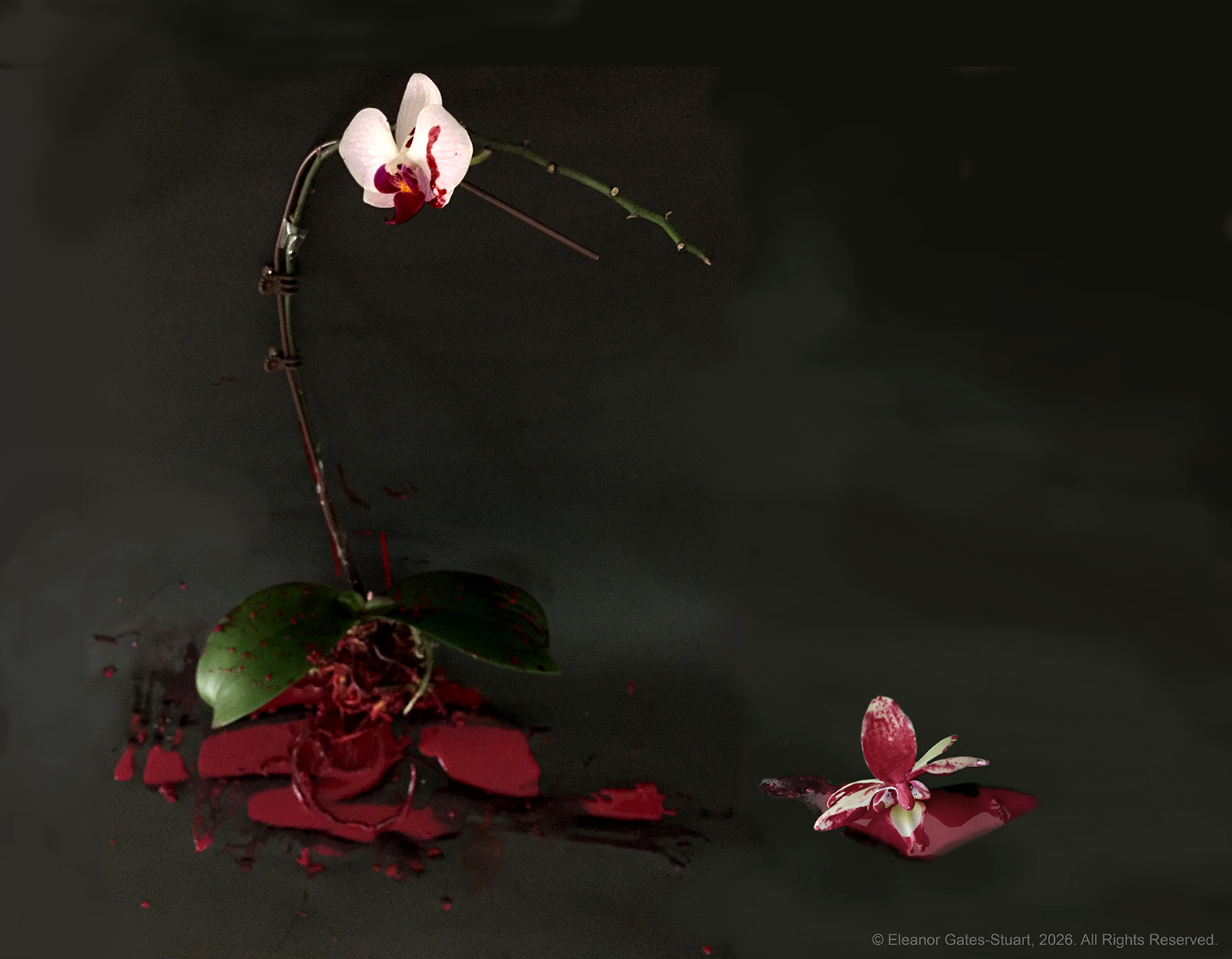
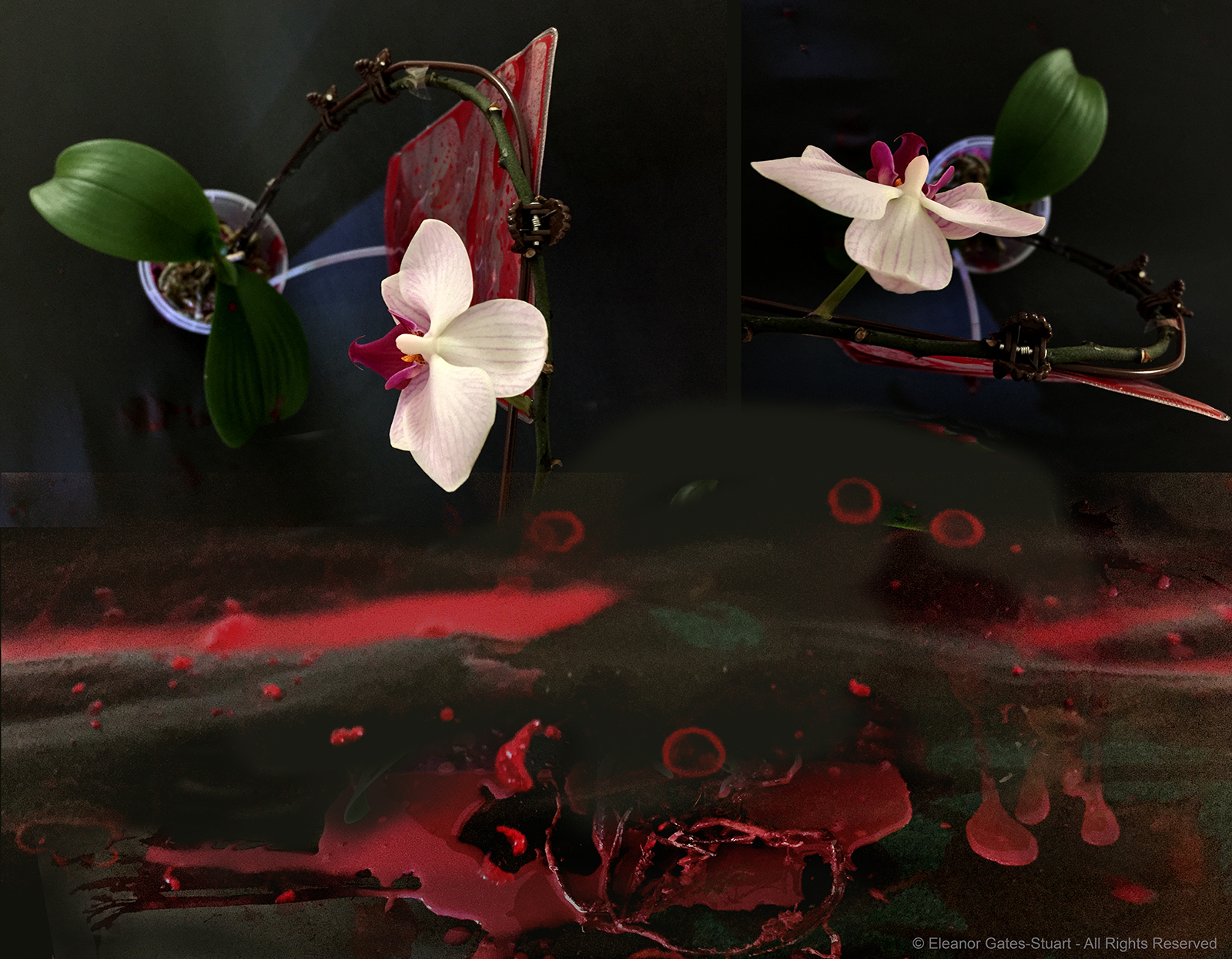
Across Passenger, Heterogeneous and Transfusion, the orchid assumes a stronger presence within the visual narrative. Experimental material remains visible, but the plants are no longer simply subjects of treatment or observation. They occupy the compositions with an unexpected resilience, set against dark fields, intense colour and traces of the substances used throughout the research. Beauty and unease coexist, while the plants remain vigorous, commanding and, at times, almost heroic.
Trace
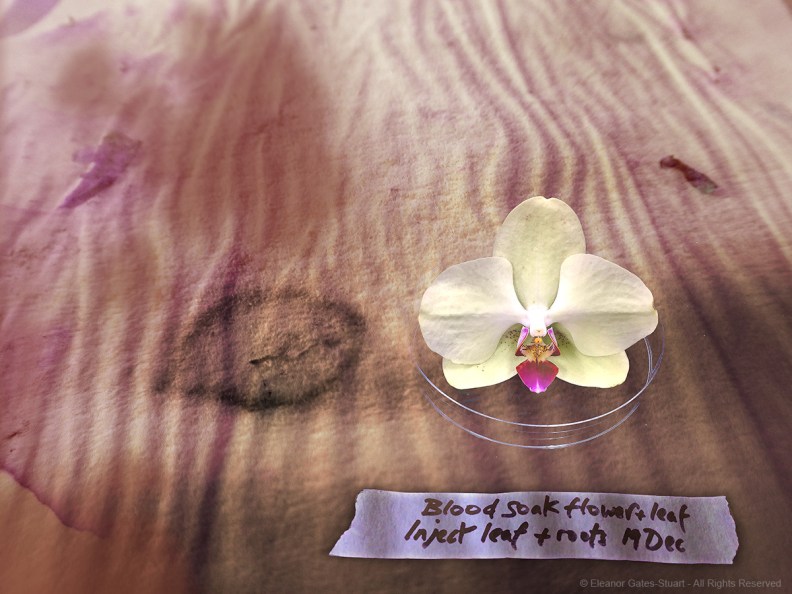
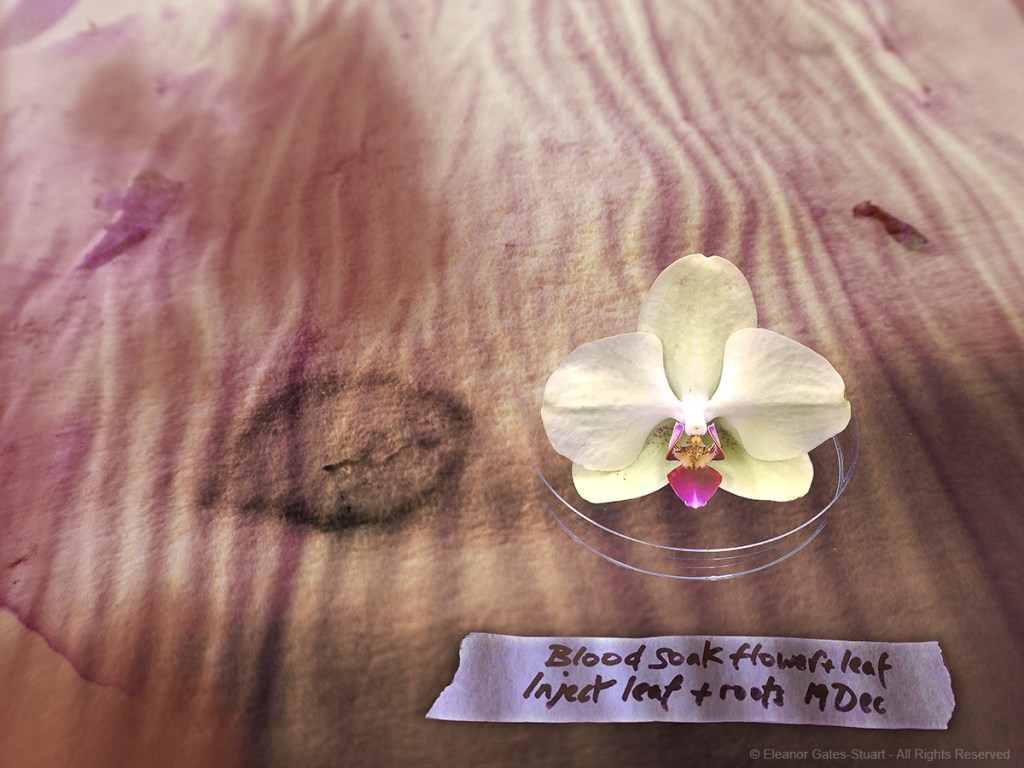
Resistance shifts attention from transformation to what remains. A flower, its cast shadow and the stain left by a leaf register different forms of presence, while the handwritten blue label retains the language of experimental recording. The blotting paper appears soft and fragile, yet its function is to draw moisture from plant material, introducing a tension between preservation and depletion. The work considers the physical trace of the plant as both evidence and image.
Continuing the Experiment
Punctuated Equilibrium returns to two orchids treated with red dye through different approaches, one within the laboratory experiment and the other through StudioLab practice. Bringing them together creates a visual comparison between treatment, environment and appearance without suggesting equivalence in their biological response. The arching laboratory orchid reaches across the composition towards its counterpart, turning documentary material into an encounter between two related but differently treated specimens.
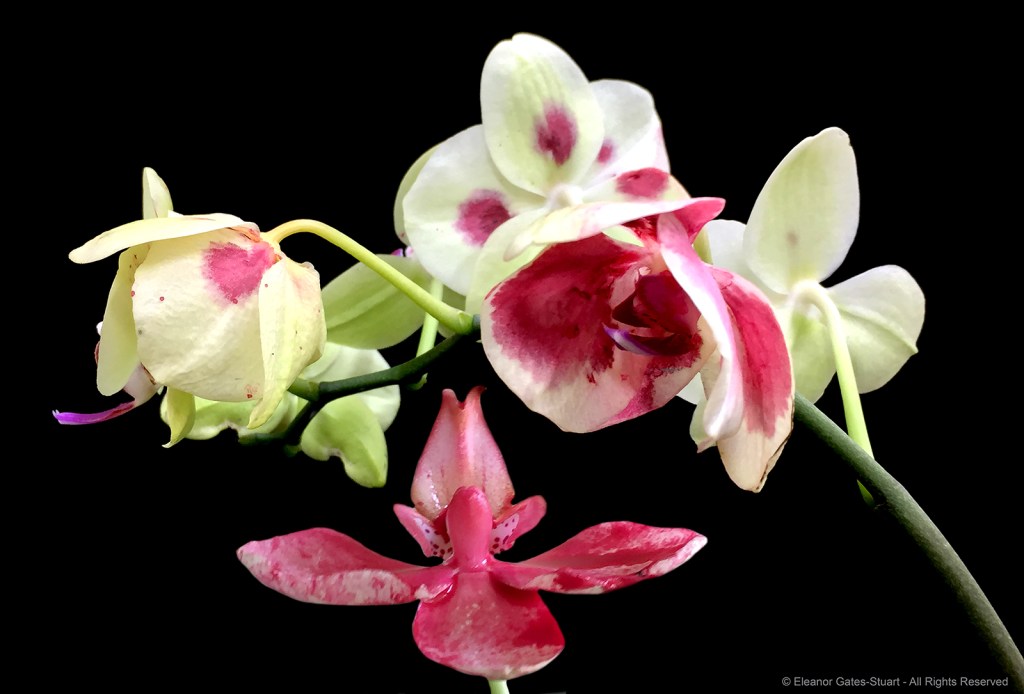
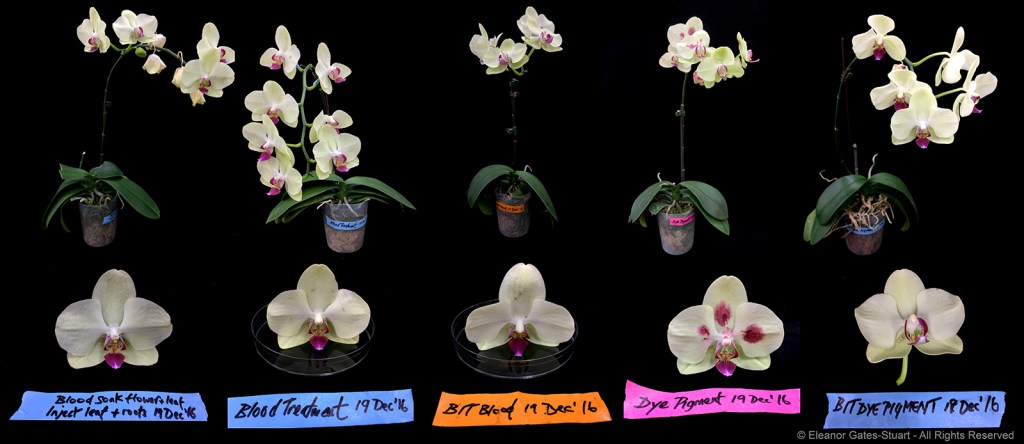
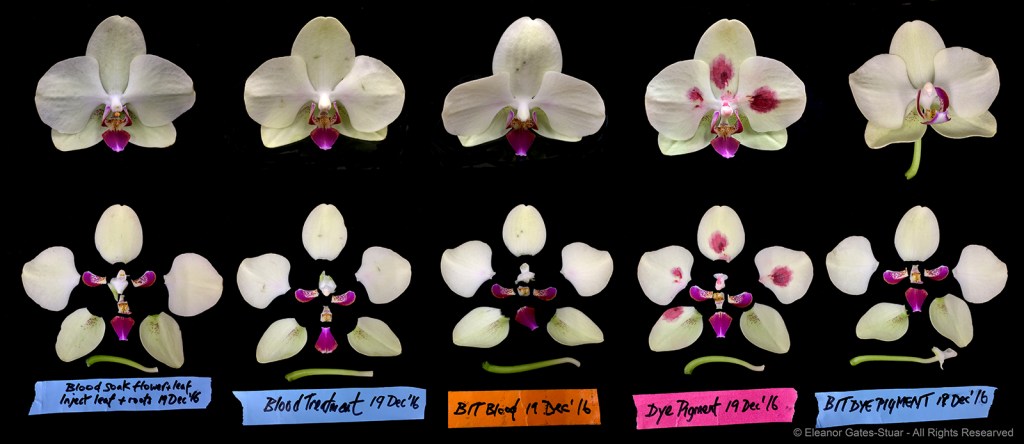
The experimental record also became the basis for two detailed comparison works, bringing treated plants, flowers and dissected specimens together within carefully structured compositions. The handwritten blue labels retain their connection to the laboratory record, while the arrangement of individual specimens gives the works the character of both scientific collection and visual archive.
New Generations
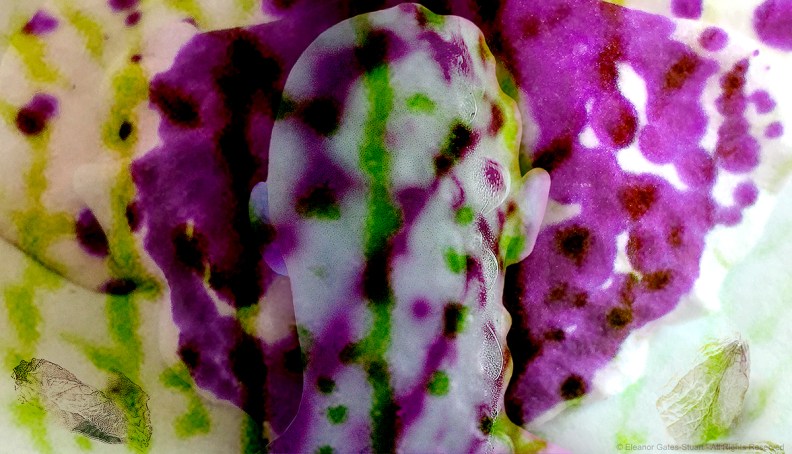
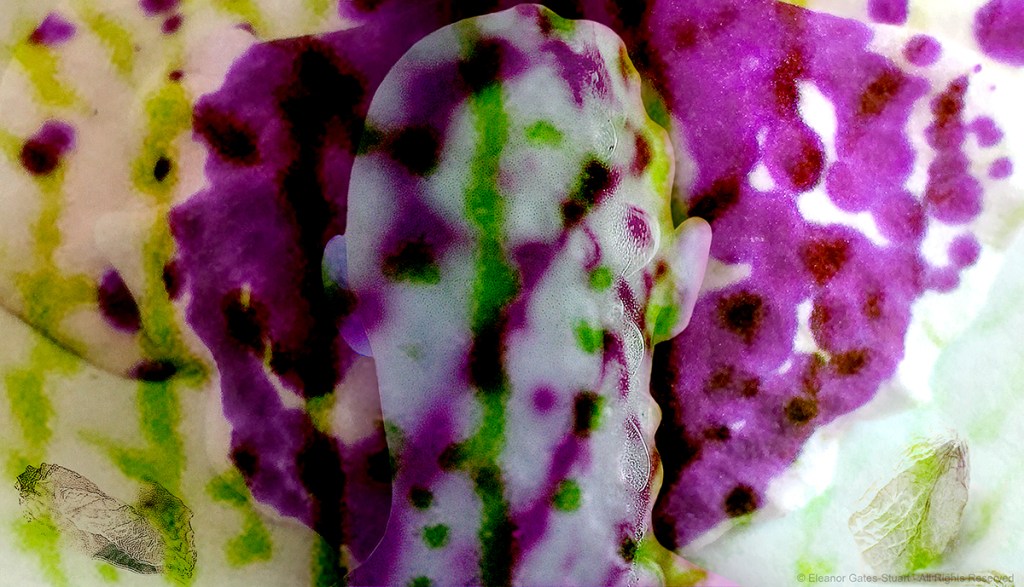
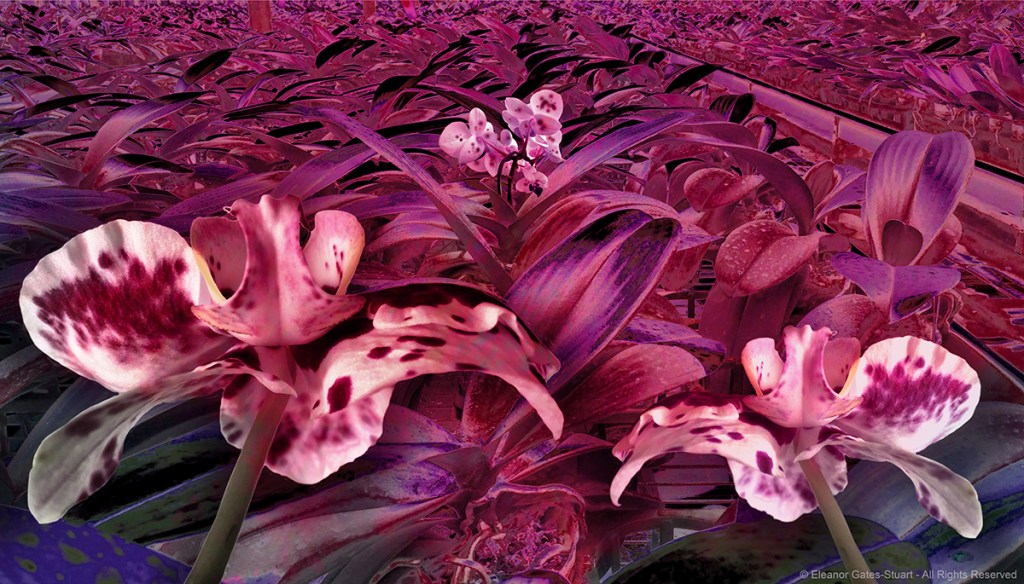
DNA and Offspring extend Blood Fusion towards questions of biological identity, continuity and future forms. In DNA, the human figure is almost absorbed into an intense field of colour and pattern, where botanical and bodily structures compete for recognition. Offspring opens the composition outward into a cultivated environment, placing a new flowering presence within a larger population of orchids. Together, the works shift the project from the treatment of individual plants towards ideas of transformation, propagation and what might emerge next.
Between Evidence and Imagination
Blood Fusion developed a visual language from the encounter between experimental science and artistic practice rather than using science simply as subject matter. Across photography, drawing and digital composition, laboratory procedures, biological structures, human features and speculative forms move between evidence and imagination. Orchids shift from experimental specimens to commanding visual presences, while blood, dye, apparatus, pattern and bodily imagery become part of an evolving language of identity, transformation, resilience and biological possibility.
Making and sharing occur alongside one another throughout the research. Ideas, images and experimental propositions move between studio, laboratory, exhibition and professional exchange while the work is still developing. This creates opportunities for different forms of expertise to encounter one another, allowing artistic observation and visual thinking to contribute to the research rather than simply represent it after the event.
The strength of Blood Fusion lies in the contradictions that this process sustains. Beauty coexists with unease, scientific observation with speculation, and biological evidence with imagined transformation. Humour, ambiguity and visual seduction invite the viewer to look again, while the research remains grounded in the material and documentary record of the experiment. Rather than resolving the boundary between human and plant, Blood Fusion keeps that boundary deliberately unstable, opening a space in which likeness, difference and the possibility of change can be reconsidered.
Double Two
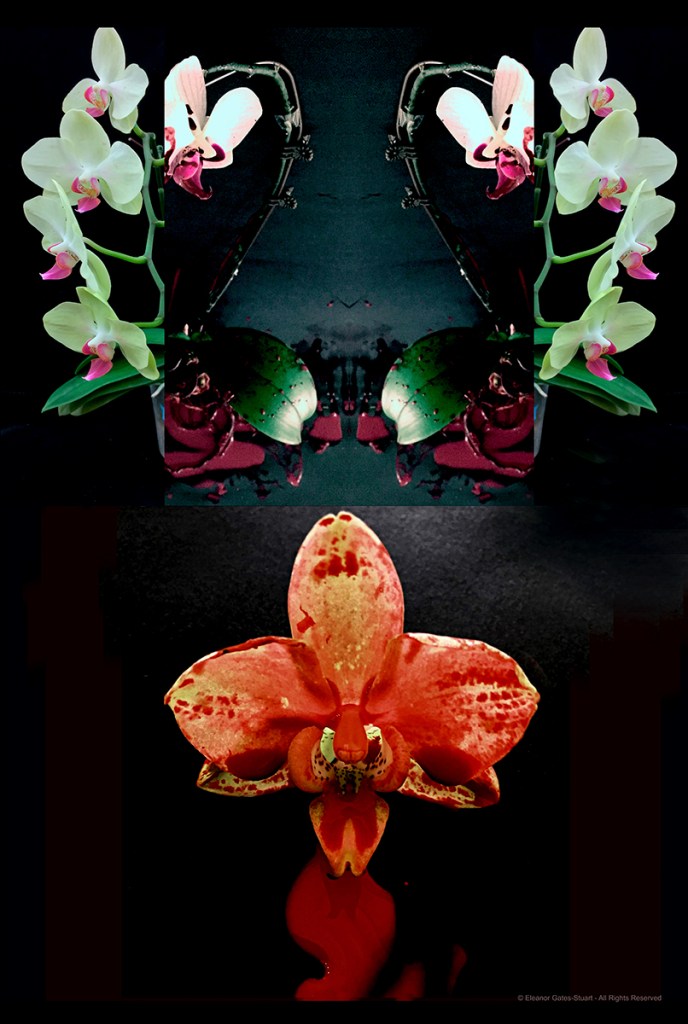
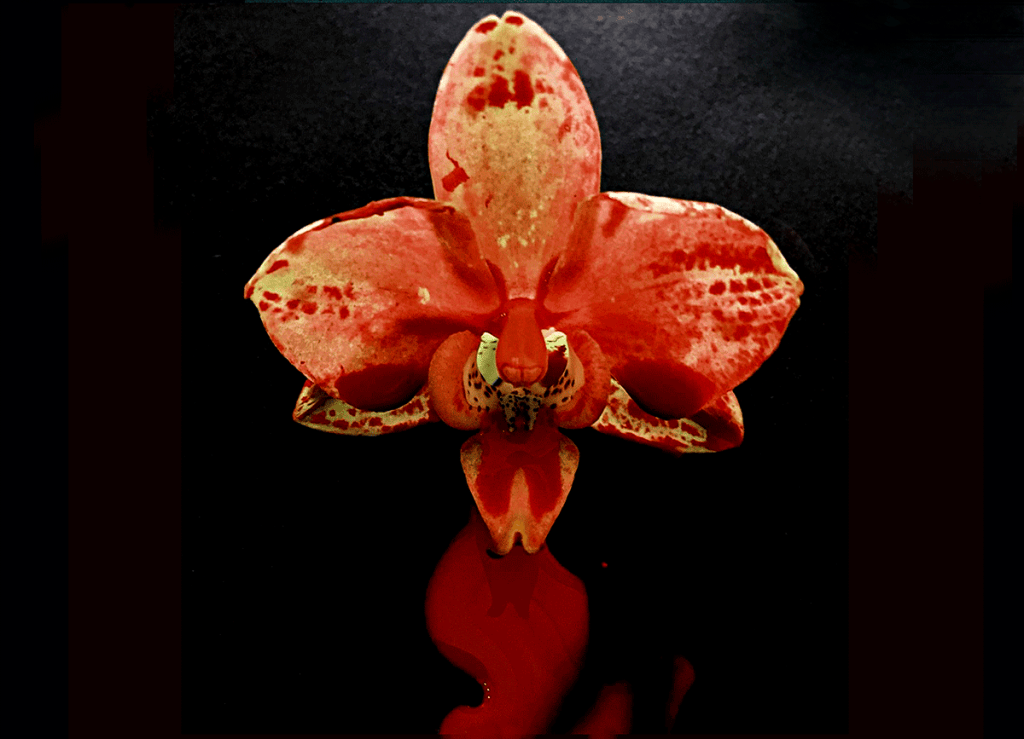
Double Two brings many of the visual concerns of Blood Fusion into a single composition. Mirrored orchids, experimental imagery and transformed floral forms create a layered structure in which repetition, symmetry and difference operate together. At its centre, the intensely red orchid becomes almost emblematic of the project, retaining its botanical identity while carrying the visual associations of blood, transformation and fusion.
Visualizing Biological Data
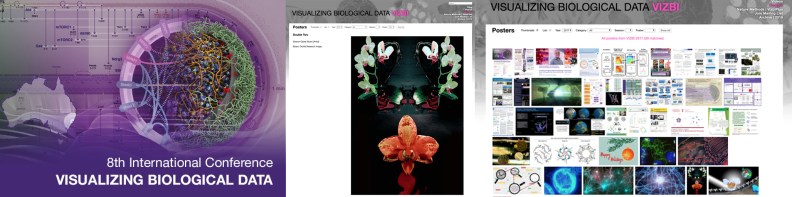
Double Two was presented at the 8th International Meeting on Visualizing Biological Data (VIZBI), held at the Charles Perkins Centre, University of Sydney, 14–16 June 2017. Its inclusion placed Blood Fusion within an international forum concerned with how biological information is visualised, interpreted and communicated, extending the project beyond the laboratory and StudioLab into a broader exchange between art, science and visualisation.
Collision, Collaboration and the Future of Artsci
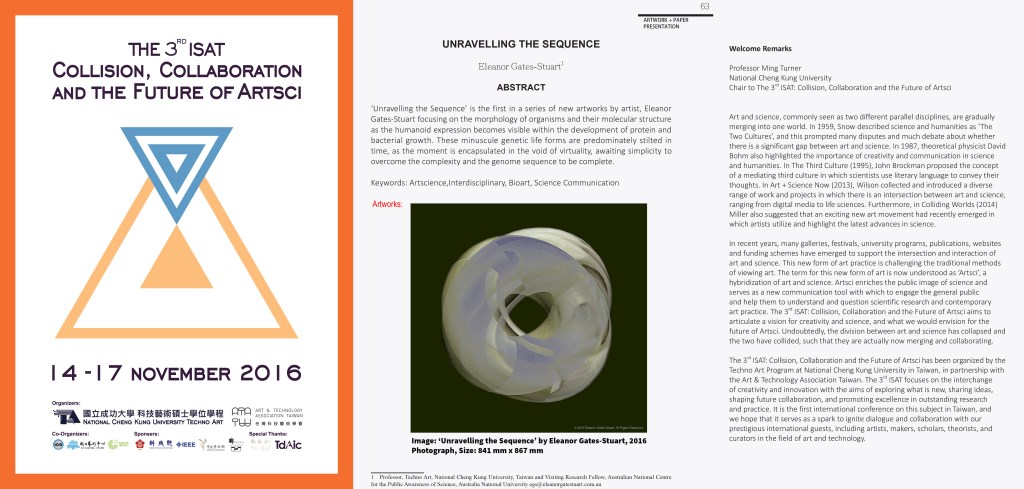
In November 2016, Unravelling the Sequence was presented in the peer-reviewed exhibition The 3rd ISAT: Collision, Collaboration and the Future of Artsci at NCKU Art Gallery, National Cheng Kung University, Taiwan. The work explored the morphology of organisms and molecular structures, with humanoid expression emerging through imagery associated with protein and bacterial growth. Presented during the development of Blood Fusion, it reflects the wider art-science research environment surrounding the project at NCKU.
Research, Publication and Archive
Blood Fusion continues across a connected series of publications, research records and creative outputs. Together they provide access to the experimental documentation, reflective writing and artworks that developed through the project, while maintaining the distinction between scientific evidence and artistic research.
Blood Fusion: Between Worlds
The reflective artist-researcher publication.
Blood Fusion Research Archive
Laboratory documentation and experimental records from the 2016 research at NCKU.
Blood Fusion Creative Research Outputs
Citable collection of artworks and associated creative research outputs.
Portrait Institute Publication No. 001: Blood Fusion
The Portrait Institute publication bringing the research, publications and archive pathways together.
Acknowledgements
Blood Fusion was undertaken at the Orchid Research and Development Center (ORDC), National Cheng Kung University, Taiwan.
With thanks to Distinguished Professor Hong-Hwa Chen and Pei-Han Lai for their support of the research and experimental work.

